
Prostate Cancer Treatment in India
Prostate cancer is now the second most commonly diagnosed cancer in men worldwide, and the third most common among men in India. The encouraging news is that because it usually grows slowly, prostate cancer caught early can very often be treated successfully many men diagnosed at an early stage have an excellent chance of a cure. If you or someone close to you has been diagnosed, the priority is getting expert, personalized care from a trusted centre.
As a medical facilitation service, we don’t provide treatment ourselves — we connect international patients with accredited hospitals and experienced urologic cancer specialists in India. The clinical information below is informed by the expertise of Dr Soumyan Dey and the urology team at Fortis Hospital, Vashi, one of the region’s most experienced prostate cancer centres.
What Is Prostate Cancer?
Prostate cancer is a tumour that develops in the prostate, a small, walnut-sized gland sitting below the bladder as part of the male reproductive system. Most prostate cancers grow slowly, though some can be more aggressive. That slow pace is exactly why early diagnosis matters so much: men found at an early stage have many treatment options and a strong chance of cure, while those with advanced disease today have more options than ever before.
Symptoms to Watch For
In its earliest stages, prostate cancer often causes no symptoms at all — which is why awareness and screening matter. As it progresses, warning signs can include blood in the urine or semen, needing to urinate frequently (especially at night), pain or burning when passing urine, a weak or interrupted flow, difficulty urinating, loss of bladder or bowel control, painful ejaculation or difficulty with erections, and pain in the lower back, hips, or ribs. Any of these is a reason to see a urologist — not to panic, but to get checked.
Who Is at Higher Risk?
Doctors don’t fully know why prostate cells turn cancerous, but several factors raise the risk: being over 50, a family history of the disease, certain inherited gene changes, being of Black/African descent, obesity, smoking, chemical exposure, and some prostate infections. Having a risk factor doesn’t mean you’ll develop cancer — but it does make regular check-ups especially worthwhile, particularly as you get older.
How Prostate Cancer Is Treated
The right treatment depends on the size of the cancer, whether and how fast it’s spreading, and your overall health and preferences. The best centres use a multidisciplinary approach — urologists, surgeons, and medical and radiation oncologists working together to build a plan around you. Common options include:
Active surveillance — for low-risk, slow-growing cancers, the cancer is monitored closely with regular testing, and treatment begins only if it starts to grow or cause symptoms. This spares many men unnecessary treatment.
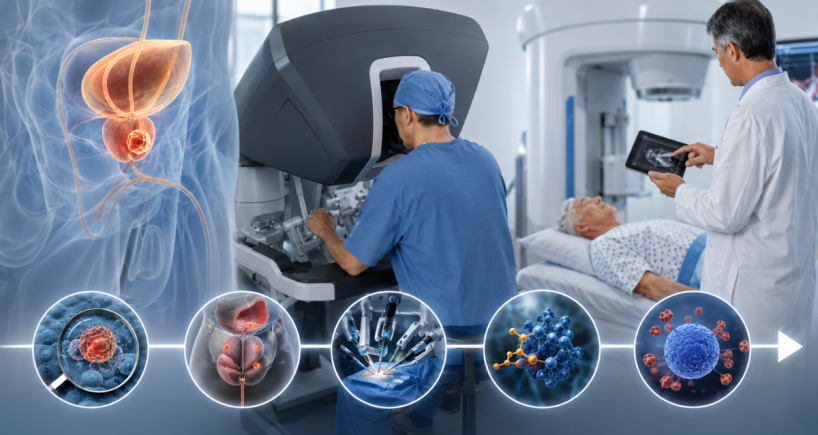
Surgery — often the main curative option when the cancer is confined to the prostate. Leading centres offer advanced minimally invasive and robotic techniques (robotic radical prostatectomy), which can mean smaller incisions, faster recovery, and better outcomes than traditional open surgery.
Radiation therapy high-energy beams that target cancer cells, delivered as external beam radiation or brachytherapy, with the approach matched to your specific cancer.
Medication including hormone therapy, chemotherapy, and immunotherapy to shrink, kill, or slow the cancer, especially in more advanced cases.
Alongside the medical treatment, strong centres also provide supportive care to help patients and families through the emotional side of a cancer journey something that matters as much as the clinical care itself.
You Don’t Have to Face It Alone
A prostate cancer diagnosis can feel life-changing, and arranging treatment in another country can add to the stress. That’s where we help. We connect you with accredited hospitals and top urologic cancer specialists in India, help you understand your options and likely costs upfront, and coordinate everything from second opinions to travel and aftercare — so you can focus on getting the best possible outcome.
Clinical source & credit: This article is informed by the expertise of Dr Soumyan Dey and the urology team at Fortis Hospital, Vashi. Patients can be connected to Dr Dey and the prostate cancer team through our service.
We are a medical facilitation service, not a healthcare provider. This article is for general education only and is not medical advice. All diagnosis and treatment decisions are made by your treating doctors.